by Natalie Lee
The Freeman subdivision consists of 10 modest lots that lie on the south side of Hanover Street, snug between Sunken Road and Littlepage Street, intersected by Fair Street (modern day Freeman Street). Two brothers, John F. Freeman and George C. Freeman (who also went by Cephas), created the subdivision, which was named after their family. The Freemans owned the Freeman Distributing Company, during the early-to mid-1900s in Fredericksburg, which distributed wholesale beer products on 723 Littlepage Road.[1] This would become where the Freeman’s started their subdivision.
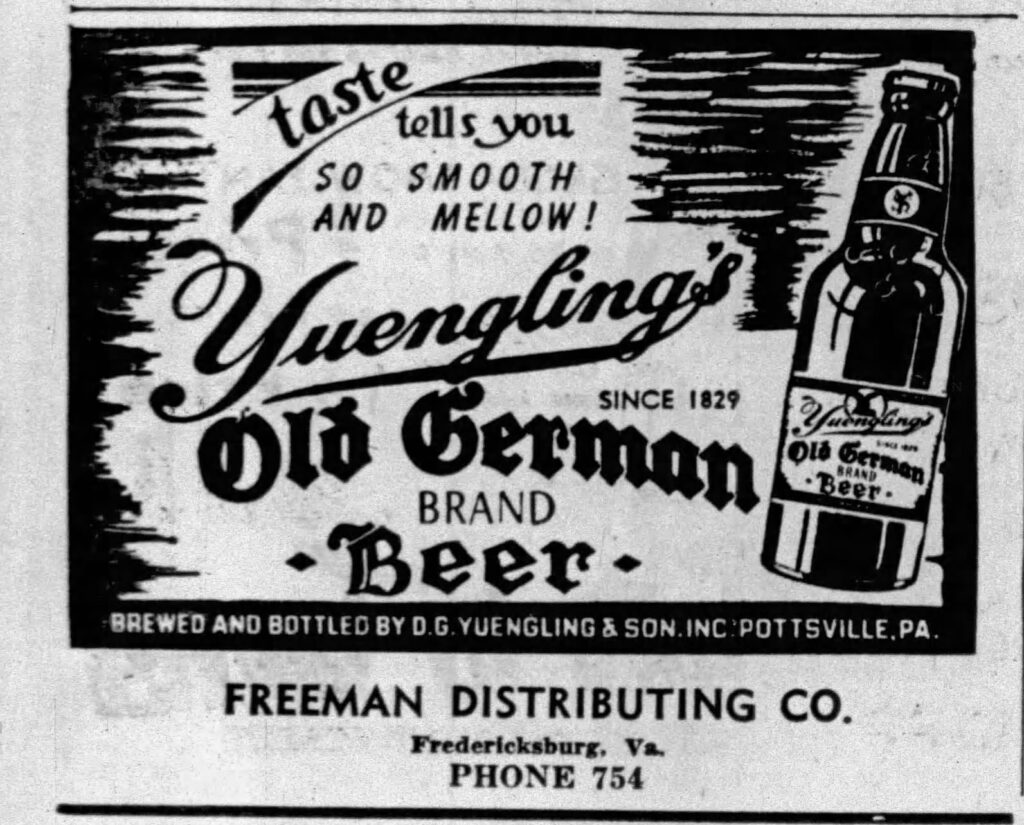
Figure 1 (right): Freeman Distributing Co. Ad, 1947. Courtesy of newspapers.com.
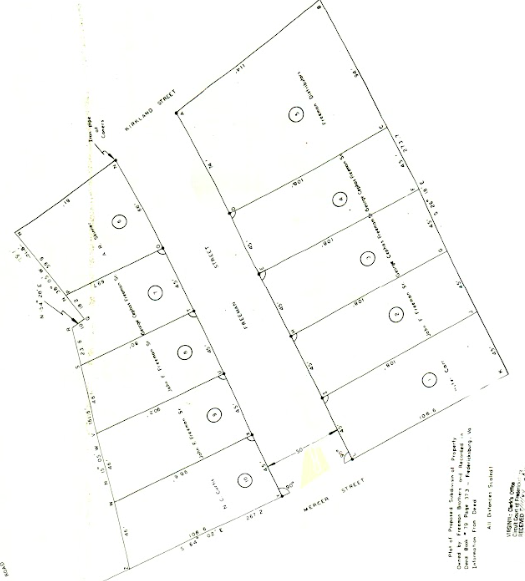
In 1945, the Freeman brothers acquired land from Dorothy Melville and George H. Melville and began selling lots in 1946.[2] When the Freemans sold a lot, they inserted a list of covenants, including a racial one. The racial covenant stated that “…nor any building, or structure that may be erected shall be sold, conveyed, or leased… to any other than white persons.”[3] Other restrictions were tied to aesthetics associated with higher-valued, single-family homes. These included the following: fences around the property had to be no more than three feet tall; houses could not have flat roofs and must be painted; all construction was setback 20-feet from the road, and the subdivision could only be used for residential purposes.[4] This list of restrictions played into the class aspect of covenants as well, not just racial. Finally, these deeds were written to last 99 years in 1946. This breaks RAP (Rule Against Perpetuity) that limits how long a covenant can be enforced on a given property. Typically, RAP indicates that property cannot be covenant for more than one generation, or 20-to-25 years.[5]
Figure 2 (left): Freeman Subdivision Plat Map, 1946. Courtesy of Fredericksburg City. Courthouse.
Table 1: Freeman’s Buyers from 1946-1949
| Grantees | Lots | Years |
| M.J. Brown and Evelyn Brown | Lot 1 | February, 1946 |
| Annie Elizabeth Skinner and Andrew Robert Skinner | Lot 6 | September, 1946 |
| Nimrod C. Curtis and Lorine W. Curtis | Lot 10 | November, 1947 |
| George C. Freeman and Kathryn R. Freeman | Lot 4 | November 1947 |
| John F. Freeman and Ethel G. Freeman | Lot 9 | November, 1947 |
| Hiter D. Carr and Teresa V. Carr | Lot 1 | April, 1949 |
The last lot sold with a racial restriction was in 1949 to Hitter D. Carr and Teresa V. Carr, one year after Shelley v. Kraemer (1948), the U.S. Supreme Court case that declared that racial covenants violated the 14th amendment and were unenforceable by the state.[6] This small subdivision reflects several different housing styles, suggesting that the houses were built by individual homeowners and not a developer. Today, what was once Fair Street is now Freeman Street in memory of the Freeman family. Throughout this neighborhood, residential housing continues to stand, as well as an animal hospital.
[1] U.S. City Directory, “Freeman Distributing Co.,” Accessed April 16, 2025, http://www.ancestry.com/.
[2] Deed book 80, Page 484 (1946), Fredericksburg City Courthouse, Fredericksburg, Virginia.
[3] Deed book 84, Page 204 (1947), Fredericksburg City Courthouse, Fredericksburg, Virginia.
[4] Deed book 84, Page 204 (1947), Fredericksburg City Courthouse, Fredericksburg, Virginia.
[5] Larry Santucci, “Documenting Racially Restrictive Covenants in 20th Century Philadelphia,” U.S. Department of Housing and Urban Development, no. 3 (2020), accessed January 20, 2025. JSTOR.
[6] Deed book 86, Page 399 (1949), Fredericksburg City Courthouse, Fredericksburg, Virginia.
*Deed book 79, Page 363 (1946), Fredericksburg City Courthouse, Fredericksburg, Virginia.